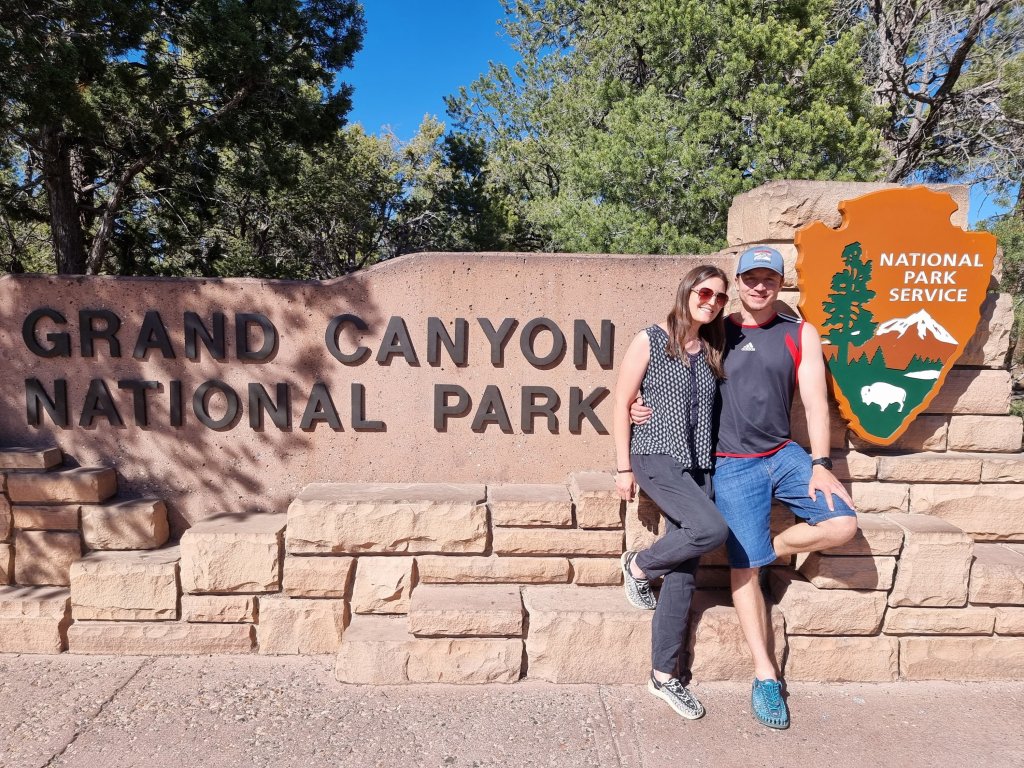
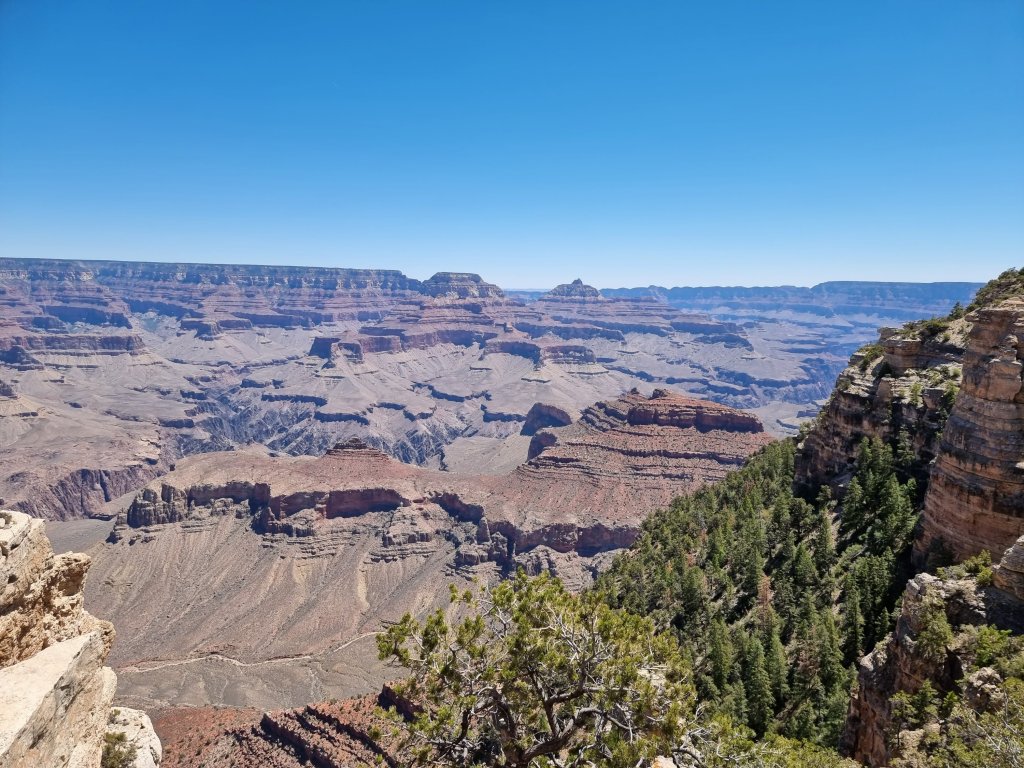
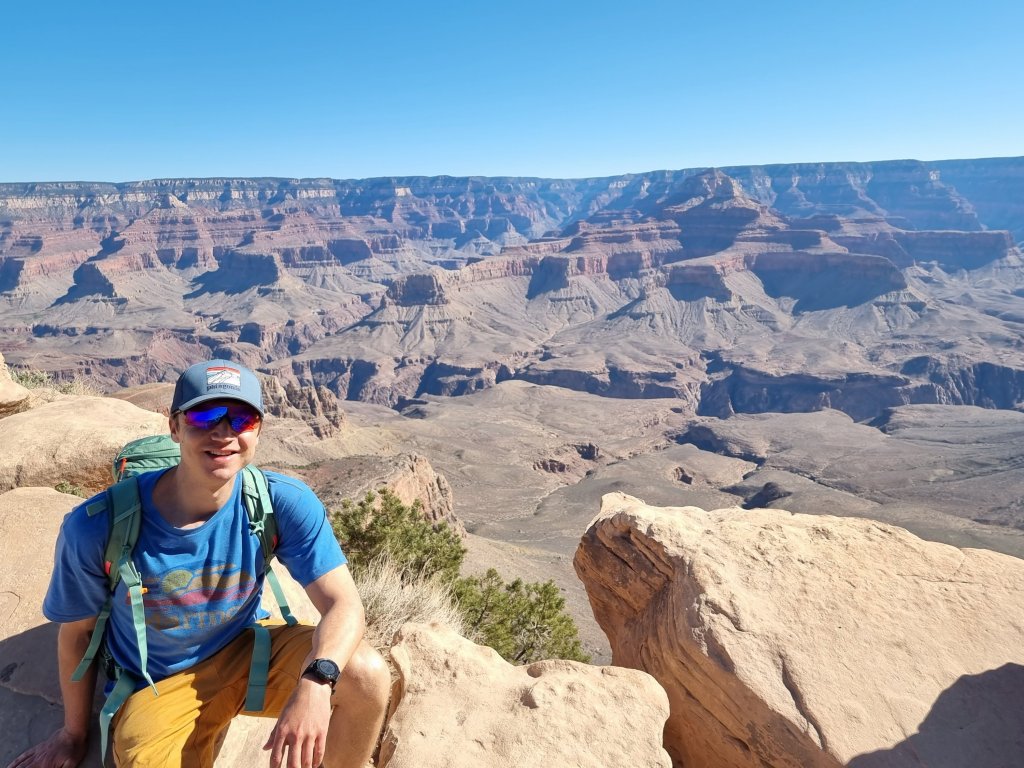
Grand Canyon National Park, in northern Arizona, encompasses 278 miles (447 km) of the Colorado River and adjacent uplands. Located on the ancestral homeland of 11 Associated Tribes, Grand Canyon is one of the most spectacular examples of erosion anywhere in the world and I mean really spectacular!
Honestly, Grand Canyon was one of those many phenomena that we came across during the journey that you had already known from photos and videos before and yet you are nothing less than incredibly stunned and amazed by its size and beauty when you look at it.
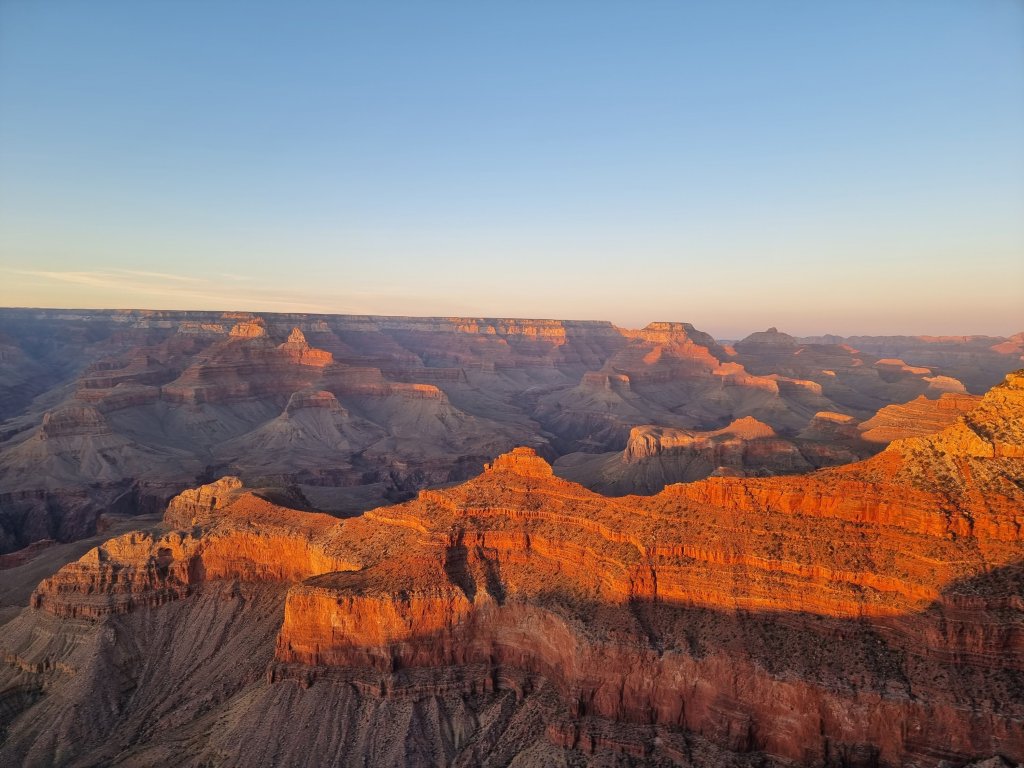
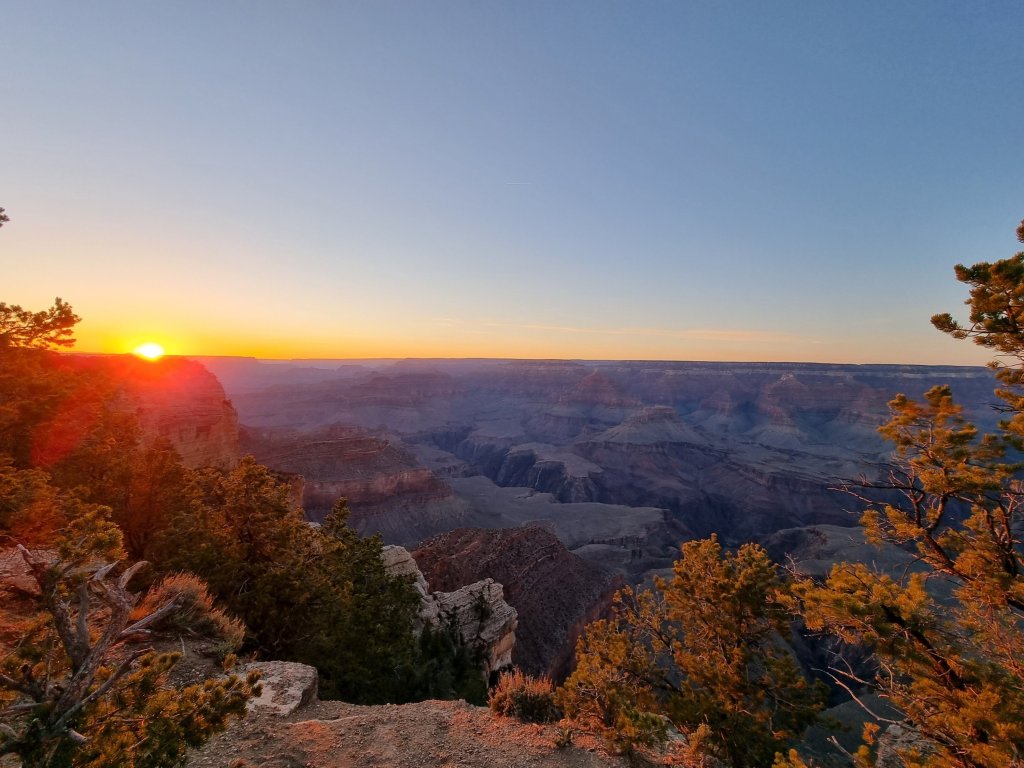
After sunset it soon got surprisingly cold. In the night the temperature probably didn’t exceed 1-4°C. It was quite freezing when we woke up the next morning but as quickly as it gets cold at night, it also gets hot again in the morning.
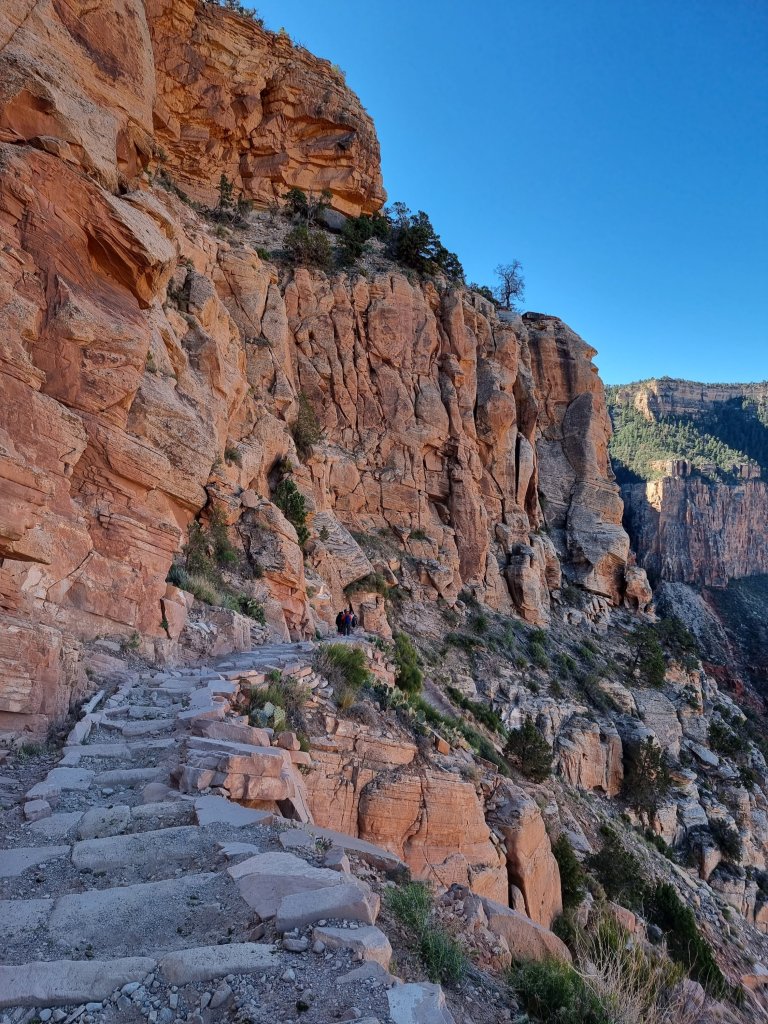
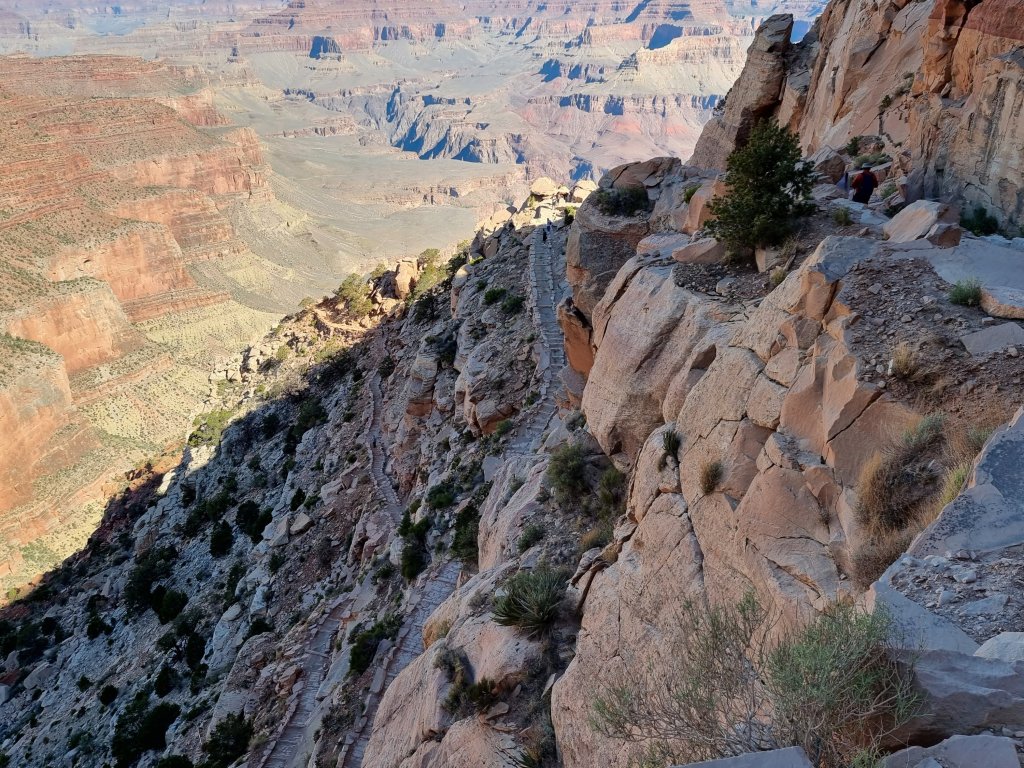
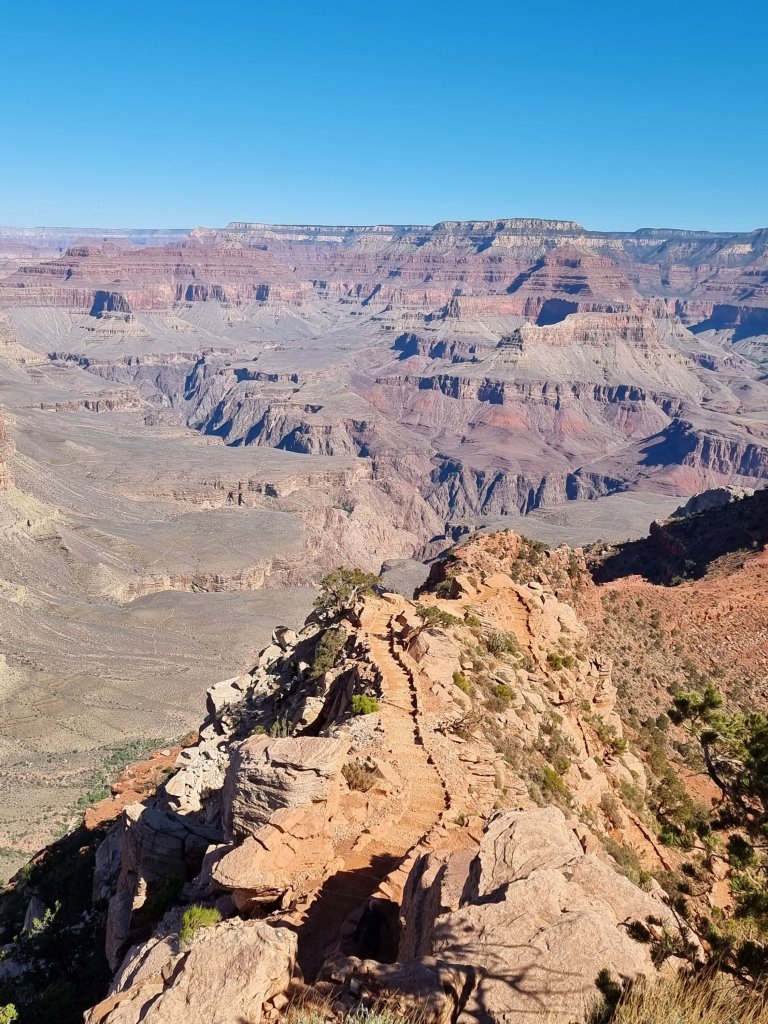
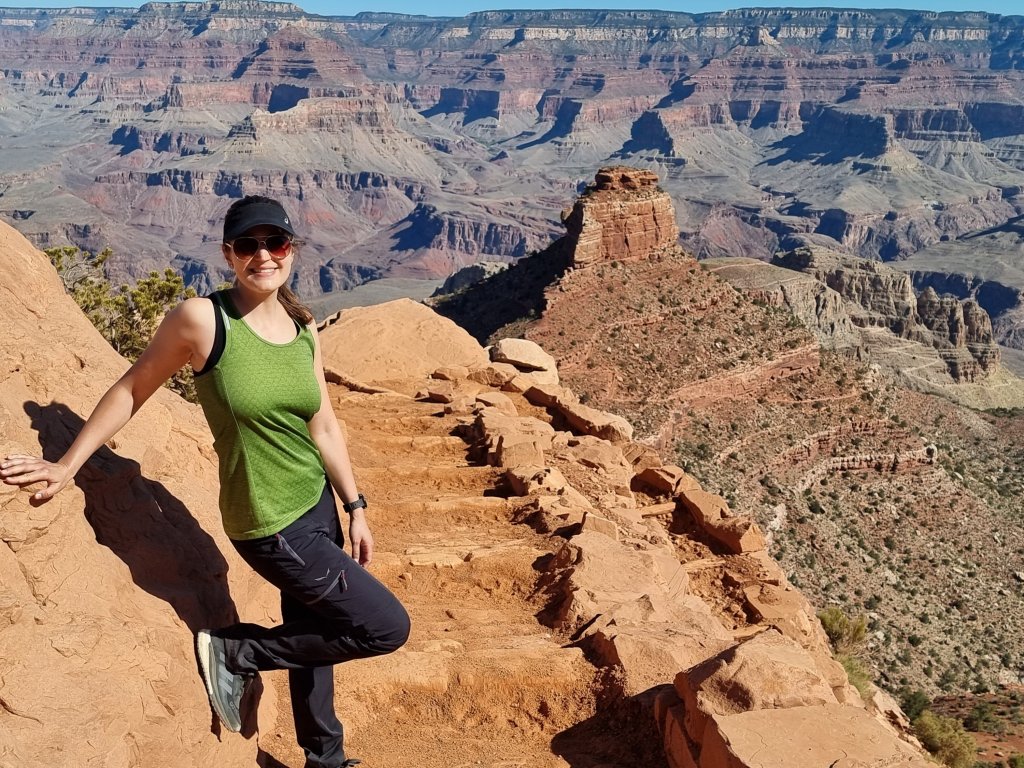
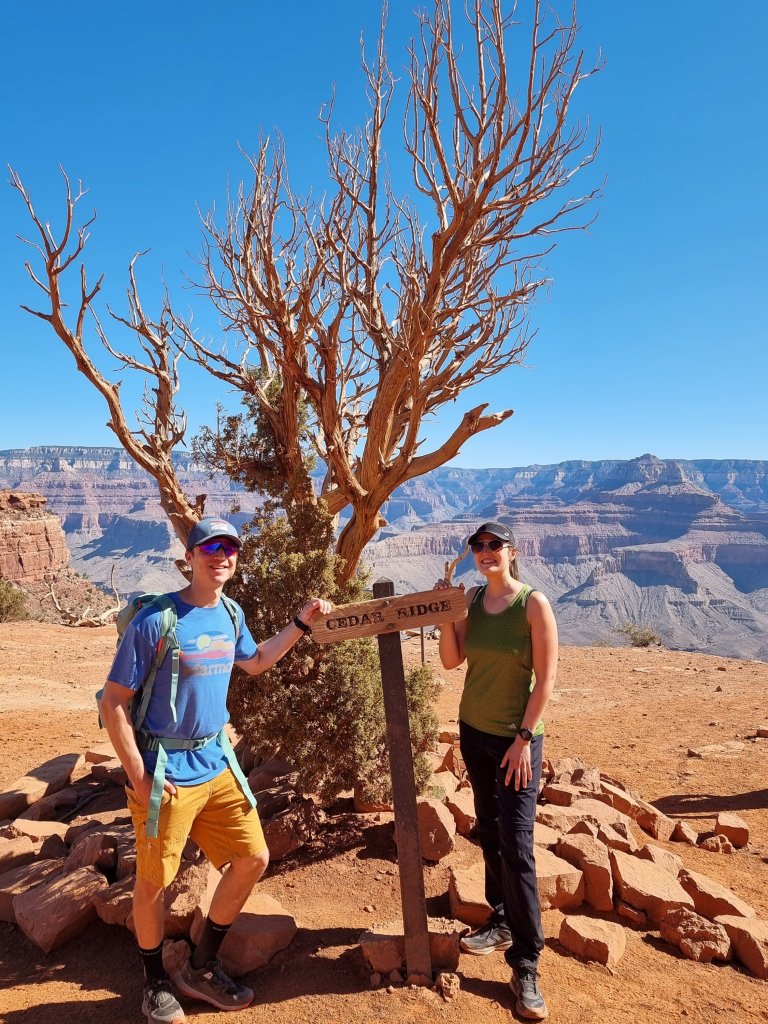
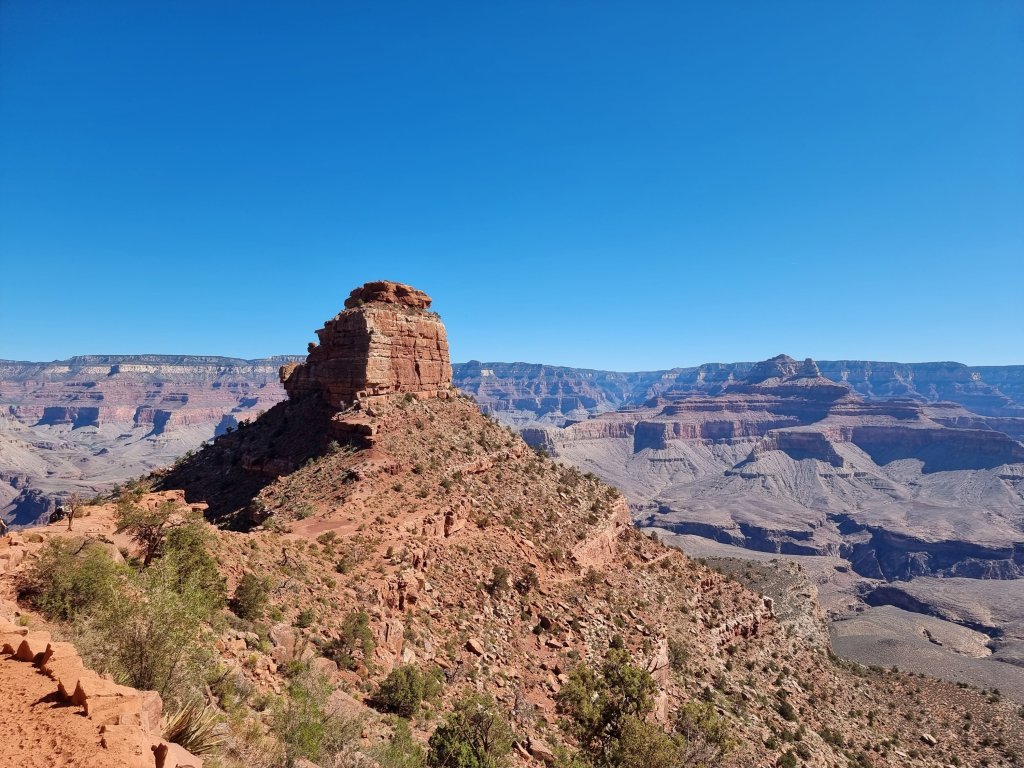
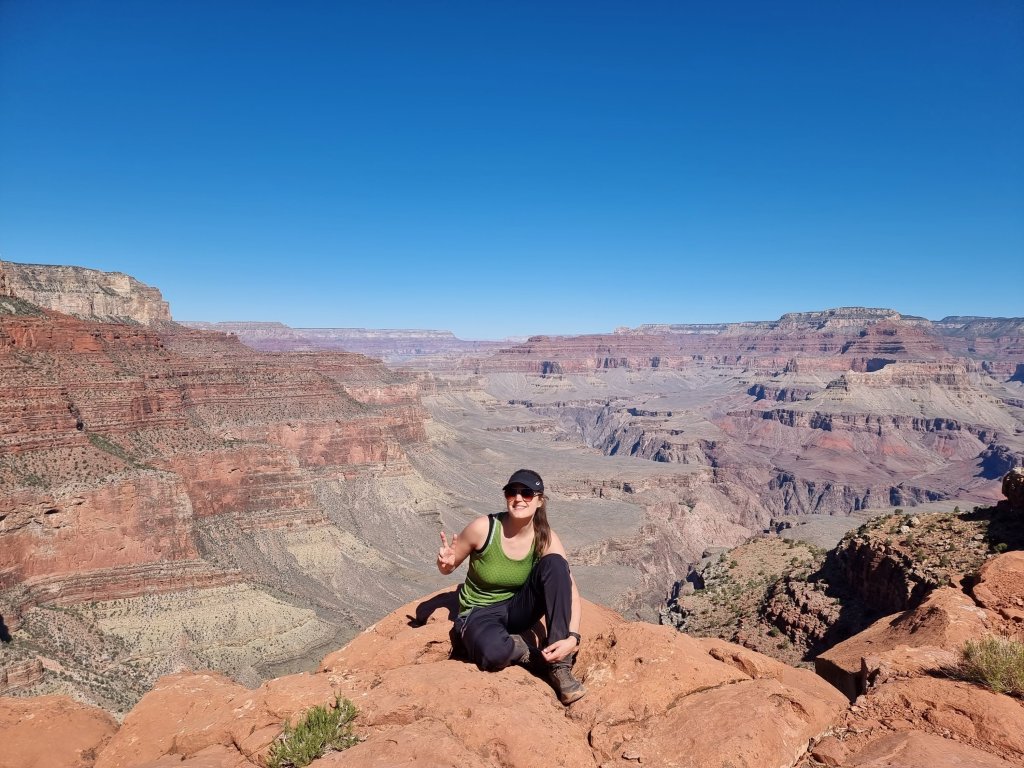
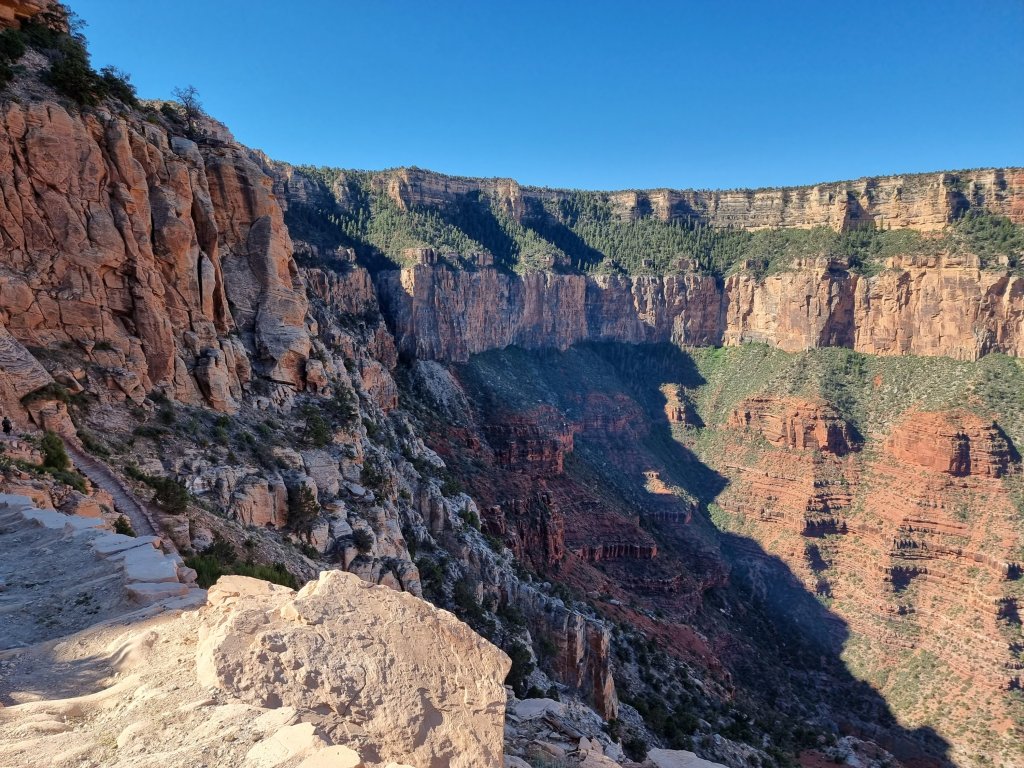
The following day we hiked the South Kaibab Trail, which goes down into the canyon (as opposed to the rim walks). We started quite early to avoid the masses and also the heat.
The further you go down the canyon, the hotter it gets (11°C difference between top and bottom are no exception), the temperature can exceed 100°Fahrenheit (38°C) in summer at the bottom so you need to gauge well how far you can go down (going down is easy when it’s cool in the morning but you have to hike it all up again in the heat) 😎
 Ines & Oliver on Tour